Welcome to my weekly cybersecurity roundup! Here, I share updates on the projects I’m currently working on, along with the most insightful cybersecurity videos I watched, articles I found valuable, and podcasts I tuned into this week.
Featured Analysis
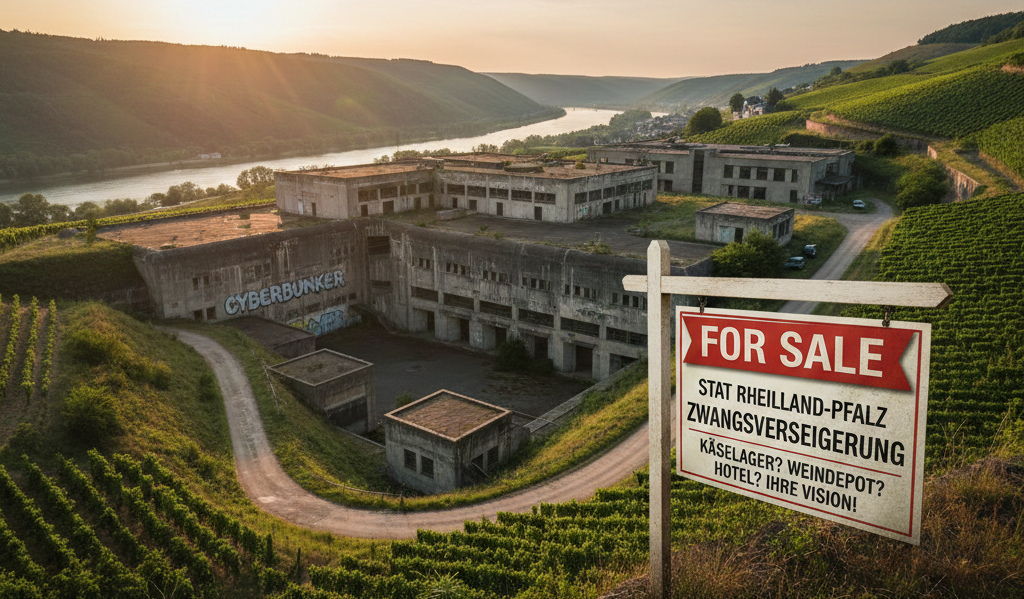
Featured article analysis: The CyberBunker’s underground facility in Germany is up for sale
Originally purchased in 2013 for approximately €450,000, the 5,500-square-meter underground complex became the nerve center for “CyberBunker,” an internet service provider that hosted illicit platforms like The Pirate Bay and WikiLeaks mirrors. The facility’s physical architecture (built to withstand nuclear blasts) provided a literal and figurative fortress for darknet activities, facilitating nearly 250,000 crimes ranging from drug trafficking to large-scale cyberattacks before a massive police raid in 2019 dismantled the operation.
The current sale highlights the complex legal and logistical challenges of repurposing “special property” tainted by criminal history. Following the prosecution of the bunker’s operators, the German state of Rhineland-Palatinate has struggled to find a suitable function for the 13-hectare site. The article notes that while the Federal Agency for Real Estate initially refused to take over the facility, the state tax office is now moving to sell it to the highest bidder. The difficulty lies in the bunker’s specialized nature and the significant renovation required for its above-ground structures, making it a difficult asset to value or integrate into the legitimate local economy.
Ultimately, the sale represents an effort by German authorities to reclaim and rebrand a site that has become synonymous with the “bulletproof hosting” industry. By seeking buyers who might transform the site into a cheese storage facility, a wine depot, or even a hotel, the state aims to replace a legacy of digital lawlessness with productive regional employment. This transition underscores a broader narrative in cybersecurity: the physical infrastructure of the dark web is just as vulnerable to state intervention as its digital counterparts, and the ultimate fate of such sites often rests on their ability to be scrubbed of their criminal past and reintegrated into society.
Projects
- TryHackMe – Advent of Cyber – Complete
- TryHackMe – CAPA: The Basics – Complete
- TryHackMe – REMnux: Getting Started – In Progress
Videos
To be clear, I don’t agree with the above video, but he does have some valid points.
Articles
- Ministers confirm breach at UK Foreign Office but details remain murky – Officials admit ‘there certainly has been a hack,’ but refuse to confirm China link or data theft
- 1,000 computers taken offline in Romanian water management authority hack — ransomware takes Bitlocker-encrypted systems down
- Hacktivists scrape 86M Spotify tracks, claim their aim is to preserve culture – Anna’s Archive’s idealism doesn’t quite survive its own blog post
- Nissan says thousands of customers exposed in Red Hat breach – Nissan Motor Co. Ltd. (Nissan) has confirmed that information of thousands of its customers has been compromised after the data breach at Red Hat in September.
- French postal service brought down by cyber attack – Le Monde Informatique reports that it is a DDoS attack.
- 3.5 Million Affected by University of Phoenix Data Breach – The University of Phoenix is one of the many victims of the recent Oracle EBS hacking campaign attributed to the Cl0p ransomware group.
- Beyond Background Checks: Building A Dynamic Insider Threat Program That Evolves With Your Workforce
- The CyberBunker’s underground facility in Germany is up for sale – A Cold War-era bunker, built by the German military and later used by cybercrime ring CyberBunker to power the dark web, is now for sale.