Tag: Critical Infrastructure

  • What’s New in Cybersecurity This Week: Projects, Videos, Articles & Podcasts I’m Following – 11/10/25

    What’s New in Cybersecurity This Week: Projects, Videos, Articles & Podcasts I’m Following – 11/10/25

    Welcome to my weekly cybersecurity roundup! Here, I share updates on the projects I’m currently working on, along with the most insightful cybersecurity videos I watched, articles I found valuable, and podcasts I tuned into this week.

    Featured Analysis

    Featured article analysis: Australia’s spy boss says authoritarian nations ready to commit ‘high-impact sabotage’

    This is a critically important warning for every organization dependent on modern infrastructure, from financial services to manufacturing. The Director-General of Australia’s Security Intelligence Organisation (ASIO), Mike Burgess, has explicitly stated that authoritarian nations are preparing to commit “high-impact sabotage” against critical infrastructure, specifically targeting energy supplies and telecommunications networks. Burgess moved these threats out of the realm of hypothetical concern, noting that “elite teams” working for foreign governments are actively investigating these possibilities right now. Citing groups like the China-backed Volt Typhoon, whose intent was disruptive penetration of American critical infrastructure, the intelligence chief underscored that once network access is achieved, the ensuing destruction or disruption is merely a matter of intent, not capability.

    The most jarring aspect of the warning for corporate boards and leadership teams is the critique of enterprise complacency and governance. Burgess delivered his remarks to the nation’s financial regulators and pointed out that most security incidents involve “a known problem with a known fix.” He argues that organizational surprise and struggle in the face of outages stem from a combination of poor governance and a lack of preparation for foreseeable threats. The challenge, according to ASIO, is that many leaders treat security as a “PowerPoint risk” something to be passively managed via presentations rather than an existential business continuity issue requiring proactive, connected, and coherent risk management across the entire enterprise.

    For LinkedIn professionals especially CISOs, CIOs, and Board members this analysis demands a strategic pivot from mere espionage defense to resilience against sabotage. It is a clear call to action to move beyond siloed security excellence (like isolated advanced detection systems) and focus on a “connected web” of defense that protects the most critical data and services. The core takeaway is that complexity is not an excuse for inaction. Organizations must immediately identify their essential operational technology (OT) and core systems, determine their vulnerabilities, and implement “all reasonable steps” to manage those risks, recognizing that failure to do so for foreseeable and knowable threats is inexcusable governance failure.

    Projects

    • TryHackMe – CAPA: The Basics – In Progress

    Articles

    Podcasts

  • What’s New in Cybersecurity This Week: Projects, Videos, Articles & Podcasts I’m Following – 10/27/25

    What’s New in Cybersecurity This Week: Projects, Videos, Articles & Podcasts I’m Following – 10/27/25

    Welcome to my weekly cybersecurity roundup! Here, I share updates on the projects I’m currently working on, along with the most insightful cybersecurity videos I watched, articles I found valuable, and podcasts I tuned into this week.

    Featured Analysis

    Featured article analysis: You have one week to opt out or become fodder for LinkedIn AI training

    LinkedIn’s updated data use policy, effective November 3, 2025, marks a significant expansion in its program of scraping user data for AI model training. Crucially, this policy change eliminates previous geographic exemptions, extending the practice to members in the UK, the European Union (EU), the European Economic Area (EEA), Switzerland, Canada, and Hong Kong. For professionals in these regions, virtually all publicly available data—including profile details and posts—is now fair game for harvesting. This move places LinkedIn squarely within a major global trend where tech giants are re-engineering terms of service to fuel their generative AI ventures, often raising the ire of members who explicitly provided their professional data for networking, not for mass training of commercial machine learning tools.

    Beyond personal privacy, this policy shift introduces complex challenges for corporate governance, compliance, and legal teams. By sharing scraped data with affiliates, specifically Microsoft, LinkedIn is blurring the lines between its professional network data and the broader commercial interests of its parent company. The article notes that this data will be used to show more personalized ads, which may include sensitive insights gleaned from professional activity. Furthermore, the mandatory “opt-out” mechanism—instead of an “opt-in” model—is likely to face intense scrutiny in regions with stringent privacy legislation like the GDPR. The default setting of allowing data use creates a regulatory risk, potentially positioning LinkedIn for future legal challenges regarding the lack of explicit, freely given consent.

    The analysis serves as a clear call to action, emphasizing that professionals in the newly included regions have a narrow window to safeguard their data. The process is a two-step affair: first, opting out of AI training under the Settings > Data Privacy menu, and second, adjusting the relevant preferences under the Advertising Data category to prevent data sharing with Microsoft affiliates for ad purposes. For a LinkedIn audience—whose primary asset is their meticulously curated professional identity—understanding and executing these opt-out steps is an urgent necessity. Failure to act defaults their professional biographies and content into the engine that powers the next generation of AI tools, permanently changing the intended use and ownership of their digital profile.

    Projects

    • TryHackMe – CyberChef: The Basics – In Progress

    Videos

    Articles

  • What’s New in Cybersecurity This Week: Projects, Videos, Articles & Podcasts I’m Following – 10/13/25

    What’s New in Cybersecurity This Week: Projects, Videos, Articles & Podcasts I’m Following – 10/13/25

    Welcome to my weekly cybersecurity roundup! Here, I share updates on the projects I’m currently working on, along with the most insightful cybersecurity videos I watched, articles I found valuable, and podcasts I tuned into this week.

    Featured Analysis

    Featured article analysis: Satellites found exposing unencrypted data, including phone calls and some military comms

    This article reveals a startling lapse in global data security, reporting that researchers from UC San Diego and the University of Maryland easily intercepted vast amounts of unencrypted sensitive data from as many as half of all geostationary satellites. Using only an $800 off-the-shelf satellite receiver over three years, they were able to eavesdrop on a broad spectrum of communications. The exposed information includes personal consumer data such as private voice calls, text messages, and internet traffic from commercial services like in-flight Wi-Fi, demonstrating that data considered private is often wide open to unauthorized interception with minimal effort.

    The scope of the security failure extends far beyond consumer privacy, encompassing communications critical to national security and vital economic operations. Critically, the researchers found the unencrypted streams included data exchanged between critical infrastructure systems, such as energy and water suppliers, offshore oil and gas platforms, and even some military communications. The effortless exposure of these transmissions poses a profound security risk, creating a significant vulnerability for coordinated attacks or industrial espionage against foundational public and private utilities.

    Following the discovery, the research team spent a year alerting affected organizations. This effort led to some immediate remediation, with companies like T-Mobile and AT&T’s network in Mexico quickly encrypting their data to mitigate the risk. However, the most alarming takeaway is the warning that the exposure is far from over. Many organizations, especially certain critical infrastructure providers, have not yet fixed their systems, meaning that large volumes of sensitive satellite data will continue to be vulnerable to eavesdropping for years to come, leaving essential systems exposed to this easily exploited security hole.

    Projects

    • TryHackMe – Vulnerability Scanner Overview – In Progress

    Videos

    Articles

    Podcasts

  • What’s New in Cybersecurity This Week: Projects, Videos, Articles & Podcasts I’m Following – 7/21/25

    What’s New in Cybersecurity This Week: Projects, Videos, Articles & Podcasts I’m Following – 7/21/25

    Welcome to my weekly cybersecurity roundup! Here, I share updates on the projects I’m currently working on, along with the most insightful cybersecurity videos I watched, articles I found valuable, and podcasts I tuned into this week.

    Featured Analysis

    Featured article analysis: Woman gets 8 years for aiding North Koreans infiltrate 300 US firms

    This article details the sentencing of Christina Marie Chapman to 102 months in prison for her pivotal role in a sophisticated scheme that allowed North Korean IT workers to infiltrate over 300 U.S. companies. Chapman facilitated this by operating a “laptop farm” in her Arizona home, creating the illusion that the workers were based in the United States. Her co-conspirator, Ukrainian citizen Oleksandr Didenko, ran an online platform, UpWorkSell, which provided false identities for the North Koreans seeking remote IT positions. This elaborate operation enabled the North Korean workers to illicitly collect over $17 million, a portion of which was funneled through Chapman’s financial accounts.

    The scope of this infiltration was extensive, with North Korean individuals securing remote software and application development roles in a wide array of high-profile U.S. entities, including Fortune 500 companies, an aerospace and defense firm, a major television network, and a Silicon Valley technology company. This access not only generated significant illicit revenue for the North Korean regime but also posed substantial national security risks by potentially exposing sensitive information and intellectual property within critical U.S. industries. The scheme highlights the persistent and evolving methods used by foreign adversaries to exploit vulnerabilities in remote work environments.

    In response to this and similar incidents, U.S. authorities have intensified their efforts to counter North Korean IT worker schemes. The Department of Justice has been actively disrupting extensive networks involved in these operations, leading to charges against individuals like Chapman and Didenko, as well as other foreign nationals. Concurrently, the U.S. Department of the Treasury’s Office of Foreign Assets Control (OFAC) has issued sanctions against North Korean front companies and associated individuals. These actions, coupled with updated FBI guidance for U.S. businesses and joint advisories with international partners, underscore a concerted strategy to mitigate the threat posed by North Korea’s illicit revenue generation and espionage activities.

    Projects

    • TryHackMe – Web Application Basics – In Progress

    Articles

    Podcasts

  • What’s New in Cybersecurity This Week: Projects, Videos, Articles & Podcasts I’m Following – 5/5/25

    What’s New in Cybersecurity This Week: Projects, Videos, Articles & Podcasts I’m Following – 5/5/25

    Welcome to my weekly cybersecurity roundup! Here, I share updates on the projects I’m currently working on, along with the most insightful cybersecurity videos I watched, articles I found valuable, and podcasts I tuned into this week.

    Featured Analysis

    Featured article analysis: Unsophisticated cyber actors are targeting the U.S. Energy sector

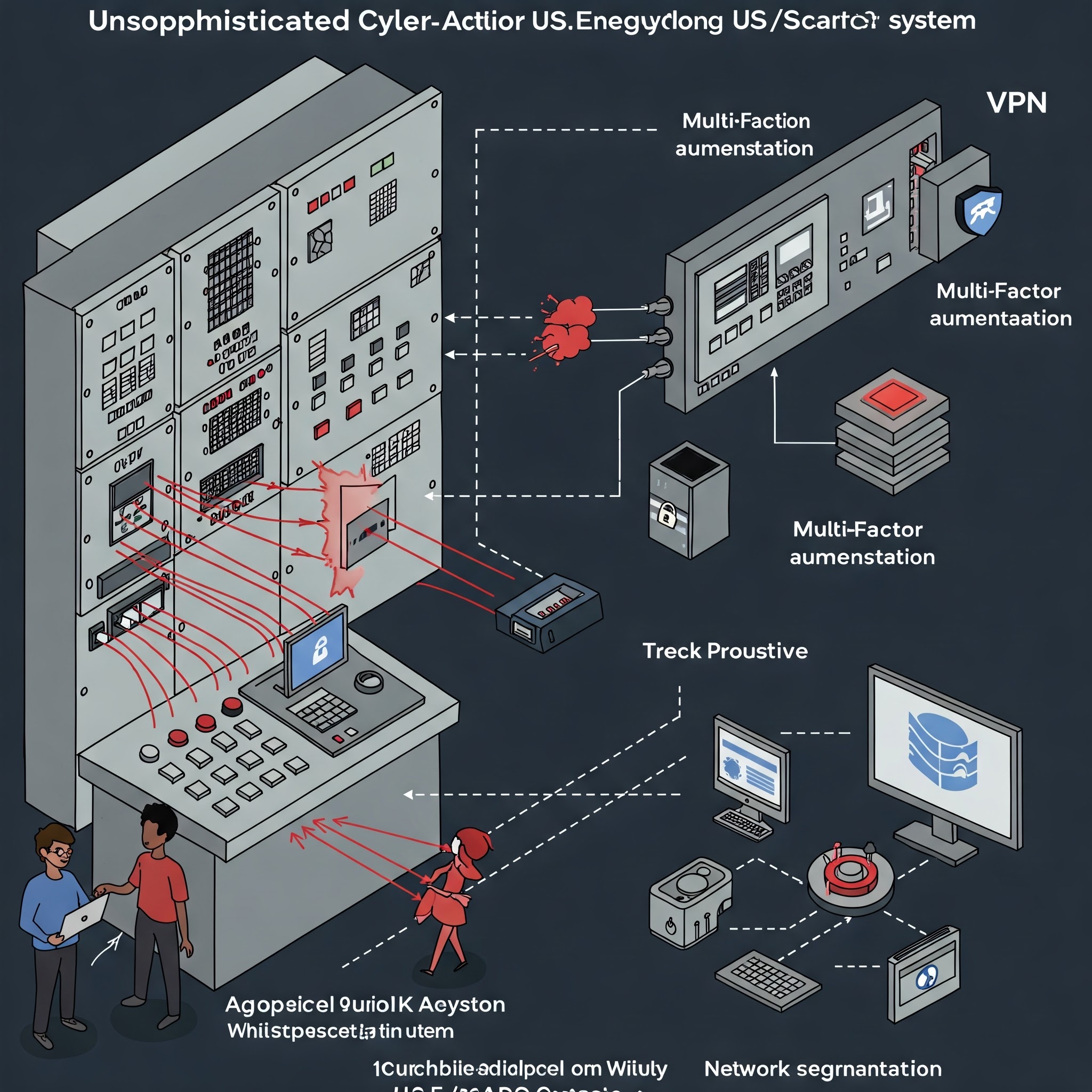
    The Cybersecurity and Infrastructure Security Agency (CISA), along with the FBI, EPA, and DoE, have issued a joint alert warning U.S. critical infrastructure, particularly the energy and transportation sectors, about ongoing cyberattacks targeting their Industrial Control Systems (ICS) and Supervisory Control and Data Acquisition (SCADA) systems. These attacks are being carried out by unsophisticated cyber actors who are exploiting weaknesses in cyber hygiene and exposed assets. Despite the use of basic intrusion techniques, the potential consequences are significant, including defacement, configuration changes, operational disruptions, and even physical damage in severe cases.

    The alert emphasizes that these “basic and elementary intrusion techniques” can be highly effective when organizations fail to implement fundamental cybersecurity best practices. Poor cyber hygiene and the presence of internet-exposed OT assets create vulnerabilities that these less skilled attackers can readily exploit. The agencies strongly urge Critical Infrastructure Asset Owners and Operators to proactively review and implement the recommendations outlined in the fact sheet titled “Primary Mitigations to Reduce Cyber Threats to Operational Technology” to bolster their defenses against these threats.

    The recommended mitigations focus on foundational security measures that can significantly reduce the attack surface and limit the impact of successful intrusions. These include removing OT connections from the public internet, immediately changing default passwords to strong, unique credentials, securing remote access to OT networks using VPNs and phishing-resistant multi-factor authentication (MFA), segmenting IT and OT networks to prevent lateral movement, and ensuring the capability to operate OT systems manually in the event of a cyber incident. Additionally, the agencies highlight the risk of misconfigurations introduced during standard operations or by third-party vendors and advise working collaboratively to address these potential vulnerabilities.

    Projects

    • TryHackMe – Tcpdump: The Basics – Complete
    • TryHackMe – Cryptography Basics – In Progress

    Videos

    Articles

    Podcasts+