
Tag: smishing

  • What’s New in Cybersecurity This Week: Projects, Videos, Articles & Podcasts I’m Following – 10/27/25

    What’s New in Cybersecurity This Week: Projects, Videos, Articles & Podcasts I’m Following – 10/27/25

    Welcome to my weekly cybersecurity roundup! Here, I share updates on the projects I’m currently working on, along with the most insightful cybersecurity videos I watched, articles I found valuable, and podcasts I tuned into this week.

    Featured Analysis

    Featured article analysis: You have one week to opt out or become fodder for LinkedIn AI training

    LinkedIn’s updated data use policy, effective November 3, 2025, marks a significant expansion in its program of scraping user data for AI model training. Crucially, this policy change eliminates previous geographic exemptions, extending the practice to members in the UK, the European Union (EU), the European Economic Area (EEA), Switzerland, Canada, and Hong Kong. For professionals in these regions, virtually all publicly available data—including profile details and posts—is now fair game for harvesting. This move places LinkedIn squarely within a major global trend where tech giants are re-engineering terms of service to fuel their generative AI ventures, often raising the ire of members who explicitly provided their professional data for networking, not for mass training of commercial machine learning tools.

    Beyond personal privacy, this policy shift introduces complex challenges for corporate governance, compliance, and legal teams. By sharing scraped data with affiliates, specifically Microsoft, LinkedIn is blurring the lines between its professional network data and the broader commercial interests of its parent company. The article notes that this data will be used to show more personalized ads, which may include sensitive insights gleaned from professional activity. Furthermore, the mandatory “opt-out” mechanism—instead of an “opt-in” model—is likely to face intense scrutiny in regions with stringent privacy legislation like the GDPR. The default setting of allowing data use creates a regulatory risk, potentially positioning LinkedIn for future legal challenges regarding the lack of explicit, freely given consent.

    The analysis serves as a clear call to action, emphasizing that professionals in the newly included regions have a narrow window to safeguard their data. The process is a two-step affair: first, opting out of AI training under the Settings > Data Privacy menu, and second, adjusting the relevant preferences under the Advertising Data category to prevent data sharing with Microsoft affiliates for ad purposes. For a LinkedIn audience—whose primary asset is their meticulously curated professional identity—understanding and executing these opt-out steps is an urgent necessity. Failure to act defaults their professional biographies and content into the engine that powers the next generation of AI tools, permanently changing the intended use and ownership of their digital profile.

    Projects

    • TryHackMe – CyberChef: The Basics – In Progress

    Videos

    Articles

  • What’s New in Cybersecurity This Week: Projects, Videos, Articles & Podcasts I’m Following – 10/20/25

    What’s New in Cybersecurity This Week: Projects, Videos, Articles & Podcasts I’m Following – 10/20/25

    Welcome to my weekly cybersecurity roundup! Here, I share updates on the projects I’m currently working on, along with the most insightful cybersecurity videos I watched, articles I found valuable, and podcasts I tuned into this week.

    Featured Analysis

    Featured article analysis: Verizon: Mobile Blindspot Leads to Needless Data Breaches

    The analysis of Verizon’s 2025 Mobile Security Index (MSI) reveals a critical and dangerous blind spot in enterprise risk management: as employees increasingly rely on personal devices for work, organizations are failing to apply commensurate security controls to the mobile frontier. This gap is rooted in a fundamental, dangerous misconception of security at both the individual and organizational level. Employees exhibit deep overconfidence, engaging in risky practices; like storing passwords in their Notes app or using their phone as the default device for “risky clicks” because they “believe nothing can happen there.” Threat actors have effectively capitalized on this low awareness by pivoting to smishing (SMS phishing), which the data shows is overwhelmingly more effective than email phishing. The 80% reported smishing attempt rate against organizations and the alarmingly high employee failure rates in simulations (with up to half of employees failing in many companies) underscore that mobile devices are now the path of least resistance for initial access breaches.

    This issue is amplified by an organizational failure to evolve security policies to match the reality of hybrid work. Companies have invested heavily in desktop and server security, yet the MSI highlights a significant parity gap on the mobile side, slowing detection and response times. This gap is structural, as most organizations do not issue work phones to all employees, meaning the majority of mobile attacks (70%) land on unmanaged personal devices. Simply put, companies are falling into the same trap as their employees, ignoring a known, high-impact vulnerability. For business leaders and security professionals, the Verizon MSI presents a clear strategic mandate for immediate action. The traditional security perimeter is gone, and organizations must shift their focus from preventing device use to managing the risk associated with it. This necessitates a combined approach of robust policy implementation and mandatory, high-frequency employee education. The data provides a powerful incentive: organizations utilizing a comprehensive set of eight mobile security best practices—including Mobile Device Management (MDM) and a zero-trust architecture—are five times less likely to experience major repercussions from a breach. The cost of inaction, leading to longer detection times and system downtime, far outweighs the investment required to bring mobile security up to parity with traditional IT controls, making

    Projects

    • TryHackMe – Vulnerability Scanner Overview – Complete
    • TryHackMe – CyberChef: The Basics – In Progress

    Videos

    Articles

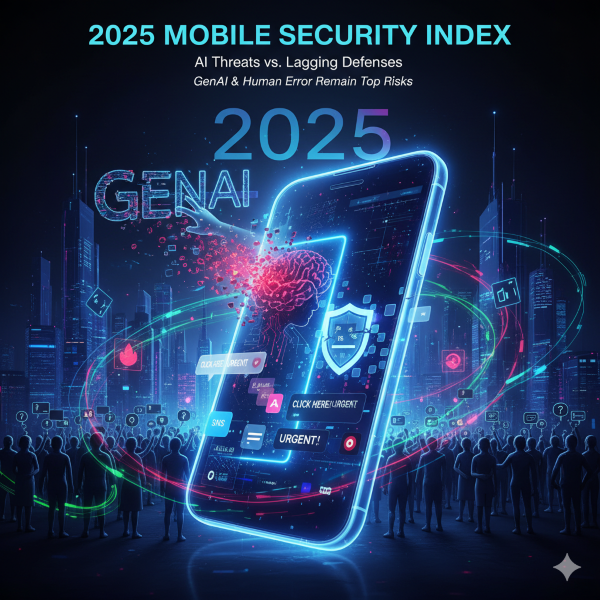
  • 2025 Mobile Security Index

    2025 Mobile Security Index

    Below are the top take-aways from the Verizon 2025 Mobile Security Index report.

    AI Threats vs. Lagging Defenses

    A significant disconnect exists between the awareness of AI-driven threats and the implementation of specific defenses.

    • High Concern: 77% of organizations believe AI-assisted deepfake and SMS phishing (smishing) attacks are likely to succeed.
    • Low Preparedness: Despite this concern, deployment of relevant controls is dangerously low.
      • Only 17% have implemented specific security controls against AI-assisted attacks.
      • Only 12% have protections in place against deepfake-enhanced voice phishing.
      • Only 16% have protections against zero-day exploits.

    GenAI & Human Error Remain Top Risks

    Widespread, unsecured use of Generative AI (GenAI) and fundamental human fallibility are the primary entry points for compromise.

    • Widespread GenAI Use: 93% of organizations report employees are using GenAI tools on their mobile devices.
    • Top GenAI Risk: 64% of respondents see “data compromise from employees entering sensitive information into genAI” as their top mobile device risk.
    • Persistent Human Error: The human element remains a key vulnerability. In smishing simulations, 39% of organizations reported that between 26% and 50% of their employees clicked a malicious link.
    • BYOD Amplifies Risk: Personal devices are a major weak point. 70% of mobile devices impacted by an attack are personal, not corporate-issued.
  • What’s New in Cybersecurity This Week: Projects, Videos, Articles & Podcasts I’m Following – 10/6/25

    What’s New in Cybersecurity This Week: Projects, Videos, Articles & Podcasts I’m Following – 10/6/25

    Welcome to my weekly cybersecurity roundup! Here, I share updates on the projects I’m currently working on, along with the most insightful cybersecurity videos I watched, articles I found valuable, and podcasts I tuned into this week.

    Featured Analysis

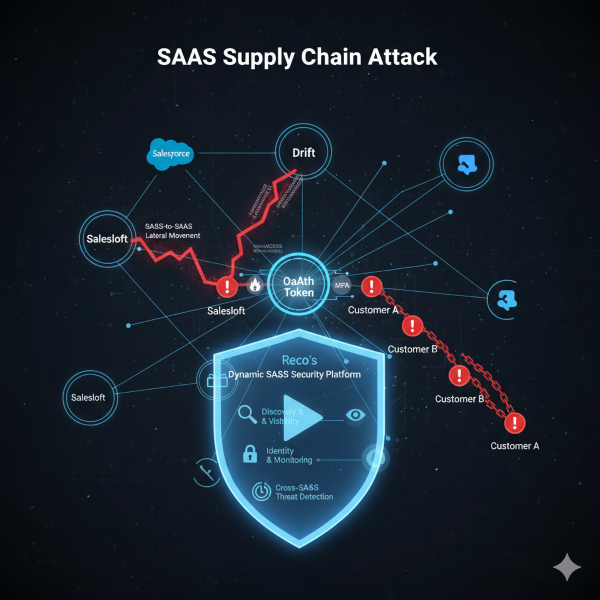
    Featured article analysis: The Salesloft-Drift Breach: Analyzing the Biggest SaaS Breach of 2025

    Analysis of The Salesloft-Drift SaaS Supply Chain Breach

    This article effectively spotlights the most critical emerging threat in enterprise security: the SaaS supply chain attack leveraging unmonitored SaaS-to-SaaS integrations. The breach of Salesloft and Drift, attributed to sophisticated groups like ShinyHunters and Scattered Spider, serves as a powerful case study for a fundamental shift in risk. Since most modern businesses rely on an interconnected ecosystem of applications like Salesforce and Gmail, a compromise in a single low-profile third-party vendor offers a “10x force multiplier” for attackers, allowing them to pivot laterally into hundreds of downstream customer environments. This risk profile—where a company’s sensitive data is accessed not through a firewall failure but through a trusted connection and persistent OAuth token—is highly relevant to all LinkedIn professionals, especially those in leadership and IT/DevOps roles responsible for vendor risk and cloud security architecture.

    The analysis of why “traditional SaaS security failed” underscores the growing SaaS Security Gap. Legacy security tools, designed for on-premise networks or simple SaaS usage, are blind to the five critical attack vectors: the persistent nature of compromised OAuth tokens, the ability for attackers to conduct SaaS-to-SaaS lateral movement, and the complete lack of visibility into these third-party connections. This is a direct challenge to the common belief that simply having an identity and access management (IAM) solution is sufficient, as IAM often trusts OAuth tokens by design. The article thus compels organizations to shift their focus from protecting the network perimeter to continuously monitoring the permissions, configurations, and behavioral patterns within and across their interconnected cloud applications.

    The proposed solution, Dynamic SaaS Security from the article’s publisher, Reco, frames the next necessary evolution in defense. It details a multi-layered strategy that directly counters each attack vector by providing instant discovery of risky SaaS-to-SaaS connections, continuous monitoring of OAuth token usage, and cross-SaaS threat detection.1 For security professionals, this translates into actionable steps: prioritizing the active scanning and removal of secrets and API keys embedded in SaaS environments and implementing real-time behavioral policies that look for anomalous activity that spans multiple applications.2 Ultimately, the Salesloft-Drift breach is presented not just as a news event, but as a watershed moment proving that static, siloed security is obsolete in the era of hyper-connected cloud workflows.

    Projects

    • TryHackMe – IDS Fundamentals – Complete
    • TryHackMe – Vulnerability Scanner Overview – In Progress

    Videos

    Articles

  • What’s New in Cybersecurity This Week: Projects, Videos, Articles & Podcasts I’m Following – 4/14/25

    What’s New in Cybersecurity This Week: Projects, Videos, Articles & Podcasts I’m Following – 4/14/25

    Welcome to my weekly cybersecurity roundup! Here, I share updates on the projects I’m currently working on, along with the most insightful cybersecurity videos I watched, articles I found valuable, and podcasts I tuned into this week.

    Featured Analysis

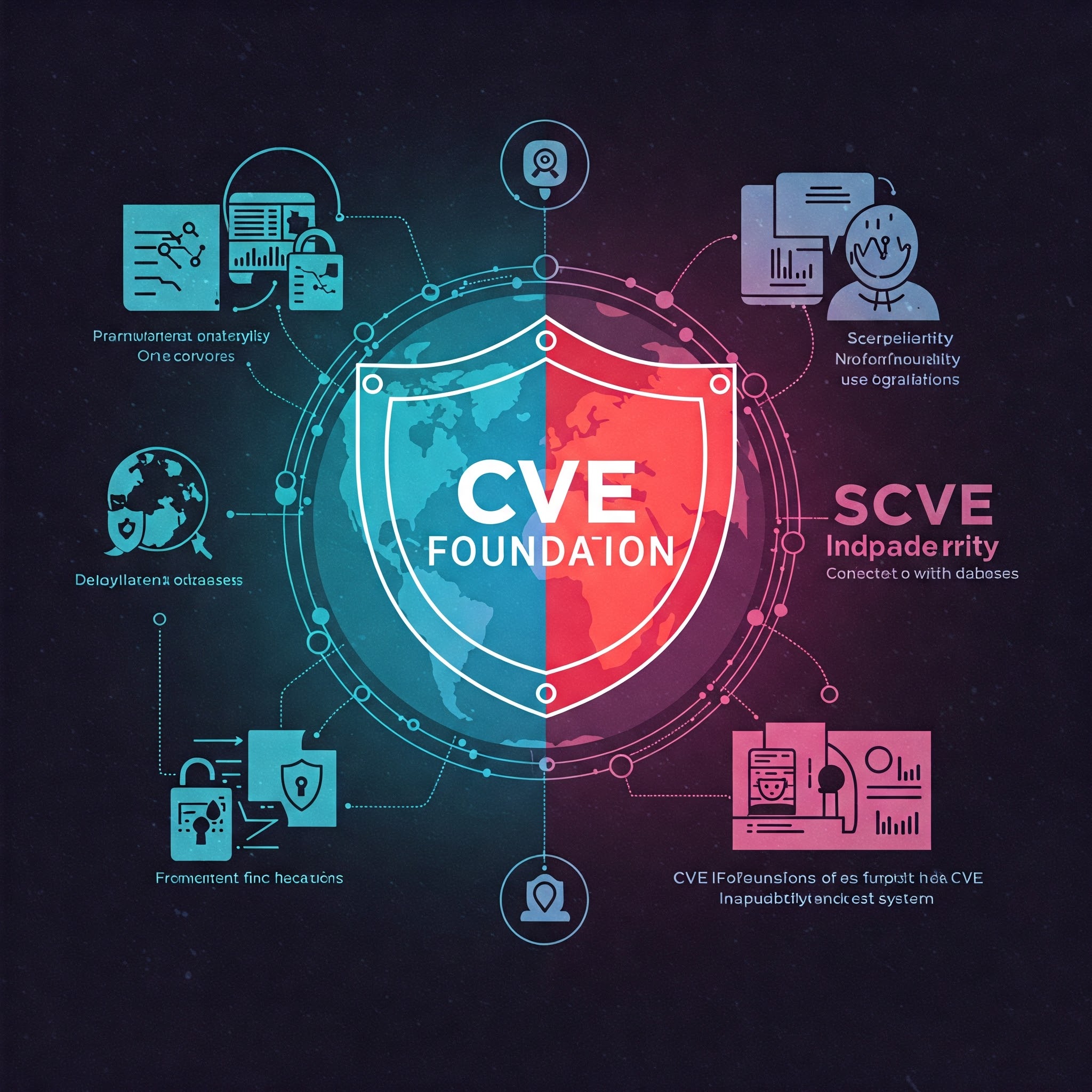
    Featured article analysis: CVE, global source of cybersecurity info, was hours from being cut by DHS

    This near-miss scenario involving the potential defunding of the CVE program by the DHS serves as a stark reminder of the precarious nature of critical cybersecurity infrastructure. The article highlights the indispensable role the CVE repository plays as the bedrock of vulnerability management. The cascading effects described by Brian Martin – the fragmentation of vulnerability data, the rise of incomplete databases, and the increased exposure of organizations – underscore the global reliance on this standardized system for identifying, tracking, and addressing security flaws. The fact that even this foundational element was at risk of disruption due to governmental budgetary shifts and political headwinds should galvanize the community to recognize the need for more resilient and independent stewardship of such vital resources.

    The swift action by CVE board members to establish the CVE Foundation as a nonprofit represents a proactive and commendable step towards ensuring the long-term stability of the program. This move acknowledges the inherent vulnerabilities of relying solely on government funding and demonstrates a commitment to the cybersecurity ecosystem’s well-being. The involvement of major tech players and international organizations as CNAs further emphasizes the collaborative and global nature of vulnerability disclosure and management that the CVE program facilitates.

    Projects

    • TryHackMe – Networking Secure Protocols – In Progress

    Videos

    Articles

    Podcasts

  • What’s New in Cybersecurity This Week: Projects, Videos, Articles & Podcasts I’m Following – 3/31/25

    What’s New in Cybersecurity This Week: Projects, Videos, Articles & Podcasts I’m Following – 3/31/25

    Welcome to my weekly cybersecurity roundup! Here, I share updates on the projects I’m currently working on, along with the most insightful cybersecurity videos I watched, articles I found valuable, and podcasts I tuned into this week.

    Featured article analysis

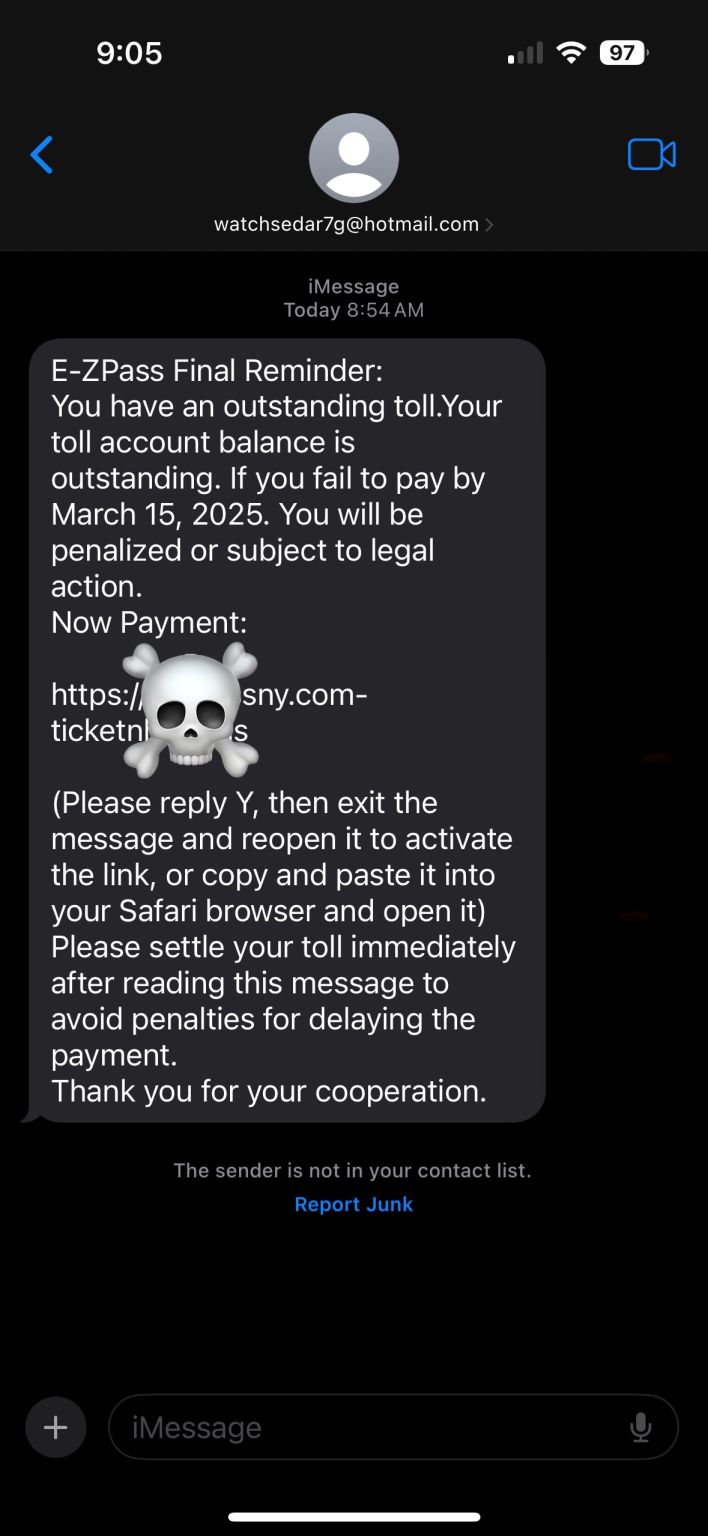
    This weeks feature article analysis is from: https://www.bleepingcomputer.com/news/security/toll-payment-text-scam-returns-in-massive-phishing-wave/

    This recent E-ZPass smishing campaign highlights several evolving tactics cybercriminals are employing to bypass security measures and exploit user trust. The attackers leverage high-volume, automated messaging systems originating from seemingly random email addresses, a method designed to circumvent standard carrier-based SMS spam filters that primarily target phone numbers. By impersonating official bodies like E-ZPass or the DMV and instilling a false sense of urgency with threats of fines or license suspension, they effectively employ social engineering. A particularly noteworthy technique involves instructing users to reply to the message, cleverly bypassing Apple iMessage’s built-in protection that disables links from unknown senders. This user interaction effectively marks the malicious sender as “known,” activating the phishing link and demonstrating how attackers exploit platform features and user behavior in tandem.

    The sophistication extends beyond the delivery mechanism, with the phishing landing pages themselves designed to appear legitimate and, significantly, often configured to load only on mobile devices, evading desktop-based security analysis. The sheer scale suggests the involvement of organized operations, potentially utilizing Phishing-as-a-Service (PaaS) platforms like the mentioned Lucid or Darcula. These services specialize in abusing modern messaging protocols like iMessage and RCS, which offer end-to-end encryption and different delivery paths, making detection harder and campaign execution cheaper than traditional SMS. This underscores the ongoing challenge for defenders: attacks are becoming more targeted, evasive, and leverage platform-specific features, necessitating continuous user education (don’t click, don’t reply, verify independently) alongside technical defenses and prompt reporting to platforms and authorities like the FBI’s IC3.

    Projects

    • TryHackMe – Networking Core Protocols – Complete
    • TryHackMe – Networking Secure Protocols – In Progress

    Videos

    Articles

  • Smishing Example

    What is Smishing?

    Smishing, a portmanteau of “phishing” and “SMS,” the latter being the protocol used by most phone text messaging services, is a cyberattack that uses misleading text messages to deceive victims. The goal is to trick you into believing that a message has arrived from a trusted person or organization, and then convincing you to take action that gives the attacker exploitable information (like bank account login credentials, for example) or access to your mobile device.

    I received this lately and I wanted to share it so you see a real-life example. I’ve blocked out the link for safety.

    I did not go to this website, but you can bet they copied the look of USPS’s website along with a login page. This login page will not work for you to login, because this is a fake site. What it will do is capture you’re password and email.

    So what, right? No harm done. Well here is another term to learn. Credential stuffing.

    What is Credential Stuffing?

    Credential stuffing is the automated injection of stolen username and password pairs (“credentials”) in to website login forms, in order to fraudulently gain access to user accounts.

    Since many users will re-use the same password and username/email, when those credentials are exposed (by a database breach or phishing attack, for example) submitting those sets of stolen credentials into dozens or hundreds of other sites can allow an attacker to compromise those accounts too.

    Credential Stuffing is a subset of the brute force attack category. Brute forcing will attempt to try multiple passwords against one or multiple accounts; guessing a password, in other words. Credential Stuffing typically refers to specifically using known (breached) username / password pairs against other websites.

    https://owasp.org/www-community/attacks/Credential_stuffing

    This is exactly what these bad guys or hackers will do. They might also sell the list that they get to other hackers. which will then in turn try the same thing. So use a password manager and don’t use the same password on more than one site. Don’t click on anything you are not expecting. If you’re unsure, contact the source directly. In this case, I am not expecting anything from USPS, and I see so many red flags on this I know it is smishing.

    Those red flags are:

    • I’m not expecting it.
    • The senders address – It is not usps.gov which is what I would expect instead it is ups.gidaew24lw@usps.tw. What the heck is that?!
    • The URL didn’t make sense either. I would expect usps.gov, but it is a .com and it wasn’t usps.com either. So strange, right?